Already decided on Pulsetto? Skip the reading:
Free shipping · 30-day returns from delivery (buyer pays the return label) · Prices checked Nov 5, 2026 on the official offer page. A wellness product, not a medical device. Not for people with pacemakers or other implanted electronics.

What Is The Vagus Nerve, In Plain English?
The vagus nerve is the longest of the twelve cranial nerves. It starts in the brainstem, runs down both sides of the neck, and branches out to the heart, lungs and digestive tract. Its name comes from the Latin for “wandering,” which is exactly what it does.
It is the main cable of the parasympathetic nervous system — the “rest and digest” side of your autonomic nervous system, as opposed to the “fight or flight” side. When the vagus nerve is active, heart rate slows, breathing deepens and digestion picks up. About 80–90% of its fibers carry information from the body to the brain (Breit et al., 2018), which is why what you do with your breath and body can shift how you feel.
What Does “Vagal Tone” Mean?
“Vagal tone” is shorthand for how strongly the vagus nerve is influencing your heart at rest. Researchers usually estimate it through heart rate variability (HRV): the small, healthy variation in time between heartbeats. Higher resting HRV is generally associated with better stress recovery.
That is useful, because it means you do not have to take anyone's word for whether something is working for you. If you track HRV in the morning for a few weeks, you have your own before-and-after.
The Three Free Methods With Real Research Behind Them
1. Slow breathing with a long exhale
Breathing at around six breaths per minute — for example, inhale for four seconds, exhale for six — is the most studied way to raise vagal activity on demand. A systematic review of slow-breathing studies (Zaccaro et al., 2018) found consistent increases in HRV alongside reports of greater relaxation and less anxiety.
2. Cold water on the face
Cold water on the face triggers the “diving reflex,” which slows the heart through the vagus nerve. In one study, face immersion in 8–10°C water increased HRV measures of vagal activity (PMID 9367278); another found it sped up parasympathetic recovery after exercise (PMID 19882167). A cold, wet cloth over the forehead and cheeks for 30 seconds is the gentle version.
3. Humming, singing and gargling
The vagus nerve supplies the muscles of the throat and vocal cords, so humming, chanting and gargling all engage it. The evidence here is weaker than for breathing and cold water, but humming naturally forces a long exhale, so it overlaps with method one.
We walk through all three, with exact timings, in our free vagus nerve exercises guide.
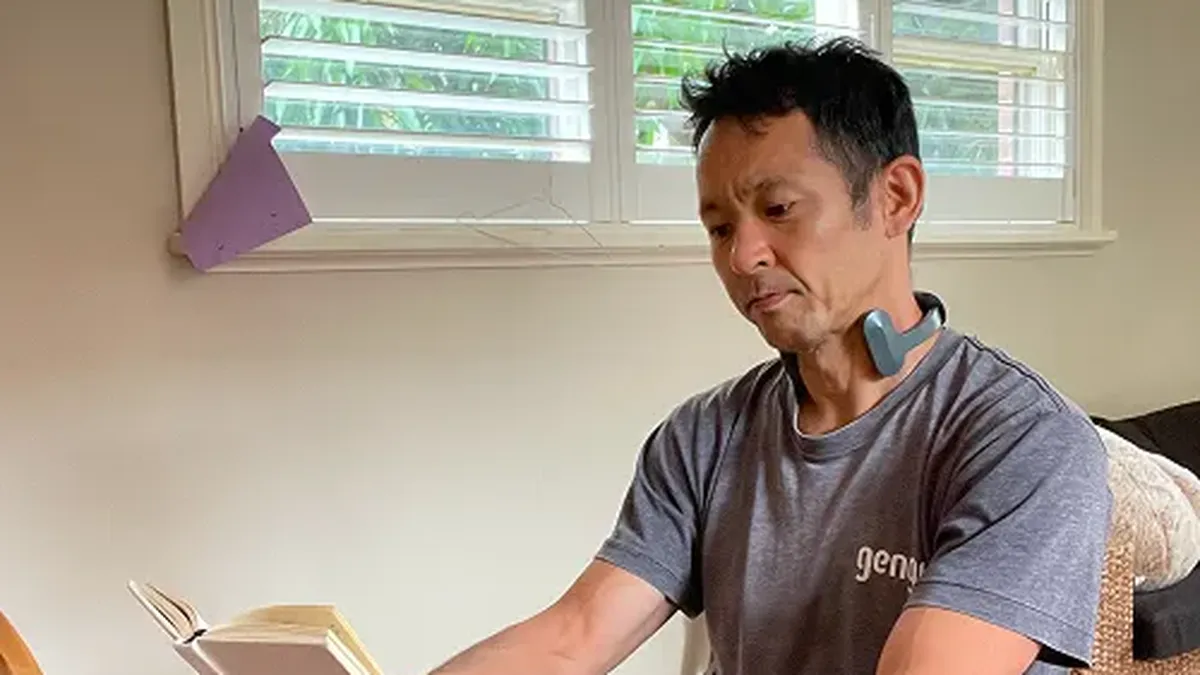
How Do At-Home Vagus Nerve Devices Work?
The devices fall into three groups, and they are less alike than the marketing suggests:
- Neck-worn electrical (cervical) devices — such as Pulsetto and Truvaga. Electrodes on the skin of the neck send a mild electrical current toward the vagus nerve. Pulsetto is worn like a collar and controlled by a phone app; Truvaga is held against the neck by hand.
- Ear-clip electrical (auricular) devices — such as Nurosym. A clip stimulates the branch of the vagus nerve that reaches the skin of the outer ear.
- Vibration and sound devices — such as Sensate. A pebble on the chest vibrates in time with soundscapes. It does not send any current to the vagus nerve; the company frames it as supporting relaxation through vibration and breathing.
For a full comparison with prices and return terms, see the best vagus nerve stimulators compared.
Free Methods vs Devices, Side By Side
| Option | Cost | Time per session | Main drawback |
|---|---|---|---|
| Slow breathing | Free | 5–10 min | Easy to skip; needs discipline |
| Cold water on face | Free | 30 sec–2 min | Unpleasant; not ideal at bedtime |
| Humming / singing | Free | 2–5 min | Weaker evidence |
| Pulsetto (neck) | About $239–$269* | A few minutes | Needs gel; not for implants |
| Truvaga Plus (neck) | About $499* | 2 min | Highest neck-device price |
| Sensate (chest) | About $249–$299* | 10–30 min | No electrical stimulation |
| Nurosym (ear) | About $700–$900* | Varies | Most expensive |
*Sources: Pulsetto prices from the official Lite and FIT offer pages (checked Nov 5, 2026); Truvaga from truvaga.com; Sensate from getsensate.com (price varies by region); Nurosym from nurosym.com and independent reviewers. Prices move with promotions; confirm the total at checkout.
What Does The Research Actually Show?
This is where most articles on this topic oversell. Here is the honest version:
- Implanted vagus nerve stimulation is an established hospital treatment for some forms of epilepsy and treatment-resistant depression. It requires surgery. None of that evidence transfers automatically to a $250 neck device.
- Non-invasive stimulation in healthy people has small, sham-controlled studies behind it. One crossover study in 19 healthy volunteers compared ear and neck stimulation against a sham and reported changes in stress markers (Frontiers in Neuroscience, 2023). Another, in 44 healthy adults, found repeated ear-stimulation sessions were associated with higher HRV and better sleep efficiency (Frontiers in Neurology, 2023).
- Brand-specific evidence is mostly company-run surveys and focus groups, which are useful as user feedback but not as proof.
What that means for you: a device is a reasonable thing to try if you want a structured daily relaxation routine and can afford it. It is not a treatment, and nobody can honestly promise you a result or a timeline.
Who Should Not Use A Vagus Nerve Device?
Every manufacturer we checked warns against use with pacemakers, implanted defibrillators, or other implanted electronic devices. Beyond that, talk to a doctor first if you have a heart rhythm problem, very low blood pressure or a history of fainting, epilepsy, are pregnant, or have broken skin where the electrodes go. If you are being treated for anxiety, depression or insomnia, a device can sit alongside that care, not replace it. The full list is in our side effects and safety guide.
If You Do Buy One: How To Choose
- Try the free methods for two weeks first. If slow breathing does nothing for you, that tells you something. If it helps but you keep forgetting, that is the real case for a device: it builds the habit.
- Decide between electrical and vibration. If you specifically want vagus nerve stimulation, Sensate is not that. If you want a guided relaxation ritual, it may be exactly right.
- Read the return policy, not the badge. “30-day trial” can mean the customer pays return shipping and must keep the original box. Know before you open it.
- Check where it ships. Some brands do not deliver to every country.
Pulsetto: the lowest-priced neck-worn electrical option
If you decide on a neck device, our reviews cover the current price, the two versions, what the free app includes, the exact return terms, and who should skip it. Pulsetto is a wellness product, not a medical device.
Still deciding between brands? Read Pulsetto vs Truvaga and Pulsetto vs Sensate, or go straight to vagus nerve stimulation for sleep and for stress.
Ready to try it? Pulsetto ships free and has a 30-day return window.
Free shipping · 30-day returns from delivery (buyer pays the return label) · Prices checked Nov 5, 2026 on the official offer page. A wellness product, not a medical device. Not for people with pacemakers or other implanted electronics.
Frequently Asked Questions
Can you stimulate the vagus nerve at home without a device?
Yes. Slow breathing with a longer exhale than inhale, splashing or holding cold water against the face, and humming or singing all engage the vagus nerve, and the first two have published studies showing changes in heart rate variability. They cost nothing and carry almost no risk for healthy adults. See our step-by-step guide to the free exercises.
Are at-home vagus nerve stimulators safe?
For healthy adults following the instructions, consumer devices use low currents and the side effects reported are usually mild: tingling, skin irritation under the electrodes, or a pulling sensation in the neck muscles. They are not suitable for people with pacemakers, implanted defibrillators or other implanted electronics, and anyone with a heart condition, epilepsy or a pregnancy should ask a doctor first. Our safety guide lists every warning we found.
Do vagus nerve stimulators actually work?
The honest answer is: the research is promising but early. Small sham-controlled studies of non-invasive stimulation in healthy volunteers have found changes in stress markers and heart rate variability. Most of the strong evidence for vagus nerve stimulation comes from implanted devices used in hospitals for epilepsy and depression, which are a different technology. Consumer devices are sold as wellness products, not as treatments.
Is a vagus nerve stimulator a medical device?
The consumer devices discussed on this site, including Pulsetto and Truvaga, are sold as general wellness products. They are not medical devices and are not intended to diagnose, treat, cure or prevent any disease. Implanted vagus nerve stimulators, which require surgery and a prescription, are a separate category.
How long does a session take?
It depends on the method. A slow-breathing session can be five minutes. Truvaga sessions are two minutes. Pulsetto sessions are a few minutes, chosen in the app. Sensate sessions run 10 to 30 minutes. Consistency matters more than length: researchers who measure vagal tone look at daily habits over weeks, not a single session.
Where is the vagus nerve on the neck?
The vagus nerve runs down each side of the neck inside the carotid sheath, alongside the carotid artery and jugular vein, roughly beneath the area where you can feel your pulse. Neck-worn devices place their electrodes on the skin over that area. One branch also reaches the skin of the outer ear, which is why some devices clip to the ear instead.
Want to see today’s price and bundle deals?
Free shipping · 30-day returns from delivery (buyer pays the return label) · Prices checked Nov 5, 2026 on the official offer page. A wellness product, not a medical device. Not for people with pacemakers or other implanted electronics.

Daniel Whitaker
I research direct-to-consumer wellness products: I read the official spec sheets, the written return policies, the safety warnings and the published research, and I check every package price on the official order page before I quote it. I am not a doctor or a medical professional, and nothing here is medical advice.
This article contains affiliate links. If you buy through them we may earn a commission at no extra cost to you. It does not change the prices, the return terms, the safety warnings or the criticisms above.