Why Are There Three Different Versions Of The Same Guarantee?
Every review of Sugar Reset mentions a 60-day money-back guarantee. Almost none of them agree on what that actually means, because almost none of them read past the sales page.
We found three sources, and each one describes different terms:
- The written returns policy, a separate legal page linked from the checkout footer.
- The sales page copy on the official order page, which is marketing language, not a policy document.
- A widely syndicated article that adds specific numbers neither of the other two mentions.
We read all three in full, on the same day, and put them side by side. Here is what each one actually says.
What Does The Written Returns Policy Actually Say?
The written policy lives at lp.institutoexperience.com.br/returns/ — a domain shared by several supplement brands under the same distributor, not the Sugar Reset sales domain itself. This is the page that governs a refund in practice, because it is the one the seller actually published as its policy.
What it grants, in its own words: a refund within 60 days, requested by emailing support with “Refund Request” in the subject line. No minimum use period is mentioned anywhere in the text. No restocking fee is mentioned anywhere in the text. No requirement that the bottle be sealed or unopened.
That is a genuinely generous policy on paper — more generous, in fact, than what the sales page tells you before you buy.
What Does The Sales Page Add That The Written Policy Doesn't?
The official sales page states this, word for word, under its guarantee section:
“Our supplements are backed by a 60-day money-back guarantee from the date of purchase. If, after at least 30 days of use, you are not completely satisfied with your results, the product, or your overall experience, simply contact us…”
Read that closely. The sales page is not just marketing tone here — it adds an actual condition, a 30-day minimum use period, that the written returns policy never states. If you asked for a refund on day 10 because the bottle leaked or you changed your mind, the written policy gives you nothing that says you can't. The sales page implies you'd need to wait.
Which one wins? The written returns policy is the document a company points to when a dispute happens — it's the one linked as the actual policy, not a marketing page. But a support agent who has only ever read the sales page might enforce the 30-day line anyway. Put your refund request in writing and reference the 60-day guarantee plainly; don't volunteer that you're asking early.
Where Does The 20% Restocking Fee Come From?
Search for this product's guarantee and you'll run into a widely syndicated article claiming considerably stricter terms: a required 30-day trial, a 20% restocking fee deducted from the refund, return shipping paid by the customer, and eligibility limited to sealed, unopened bottles.
We read the written returns policy in full. None of those four conditions appear in it. No restocking fee, no return-shipping clause, no sealed-bottle requirement. Wherever that syndicated figure originated, it does not match the seller's own published terms as they exist today.
Why this matters more than it looks. Articles like this one get repeated across finance and news-aggregator sites, and Google's own AI summaries sometimes echo the same unverified figure. A shopper who reads that first may not bother asking for a refund at all, assuming a 20% cut makes it not worth the trouble. As far as the actual written policy goes, that's a myth costing people money they're entitled to.
All Three Versions, Side By Side
| Term | Written policy | Sales page | Syndicated article |
|---|---|---|---|
| Window | 60 days | 60 days | 60 days |
| Minimum use required | Not mentioned | At least 30 days | At least 30 days |
| Restocking fee | Not mentioned | Not mentioned | 20% of refund |
| Return shipping | Not specified | Not mentioned | Customer pays |
| Bottle condition | Not specified | Not mentioned | Sealed, unopened only |
| Clock starts at | Purchase, then Delivery (see below) | Purchase | Not specified |
Notice the pattern: every added condition makes the guarantee narrower, and every added condition is missing from the one document that actually functions as the seller's policy.
Does The 60 Days Start At Purchase Or At Delivery?
Here's a detail that has nothing to do with the sales page or the syndicated article — the written policy contradicts itself. Its opening line reads:
“…you may return the product within 60 days of the original purchase date to request a refund.”
Three sentences later, its own Step 1 says:
“Make sure you are still in the 60-day period starting with the day the order has been delivered to you. To remember the delivery date please check the tracking number on the carrier's website.”
Purchase date and delivery date are not the same day, and the policy never says which of the two it means. It's a small inconsistency, but it's the seller's own document disagreeing with itself, not a case of us reading two different pages.
What to actually do with this: don't wait until day 58 to find out which date they mean. Note both your order date and your delivery date from your confirmation and tracking emails, and send your refund request well inside 60 days of whichever one is earlier.
How Do You Actually Request A Refund?
Based on the written policy, here's the process as published:
- Confirm you're inside the 60-day window — count from your purchase date, not your delivery date. It is the earlier of the two, so it is the deadline that expires first, and the one a support agent can point at.
- Send an email to the support address listed on the returns policy page, with “Refund Request” in the subject line. The policy specifically says this phrase helps prioritize your request.
- State plainly that you are not satisfied with the results, the product, or the overall experience — the policy says "for any reason," so you do not need to justify it further than that.
- Follow whatever instructions support sends back. The written policy does not commit to a specific timeline for the refund to post, only that it can take several business days once approved.
Keep a copy of every email. If a support agent quotes you the 30-day minimum from the sales page or a restocking fee that matches the syndicated article, you now have the written policy to point back to.
If the guarantee is the reason you're considering this
Sugar Reset sells only through its official checkout, which is the same domain that links to this returns policy. There is no single-bottle option and no subscription. Check today's price before ordering — the final checkout screen, not the sales page, is the number that counts.
So Which Version Should You Believe?
Believe the written policy, because it's the one the company actually published as its terms. That means: 60 days, no restocking fee, no stated minimum use period, and no requirement that the bottle be unopened.
But believe it with your eyes open about two things. First, a support agent may not have read that page any more carefully than most reviews have, and might quote you the sales page's 30-day line anyway — put your request in writing so there's a record either way. Second, the policy's own purchase-vs-delivery contradiction means the safest move is to act well before day 60, not to cut it close.
What you should not believe is the 20% restocking fee circulating in syndicated coverage. We read the actual policy. That number is not in it.
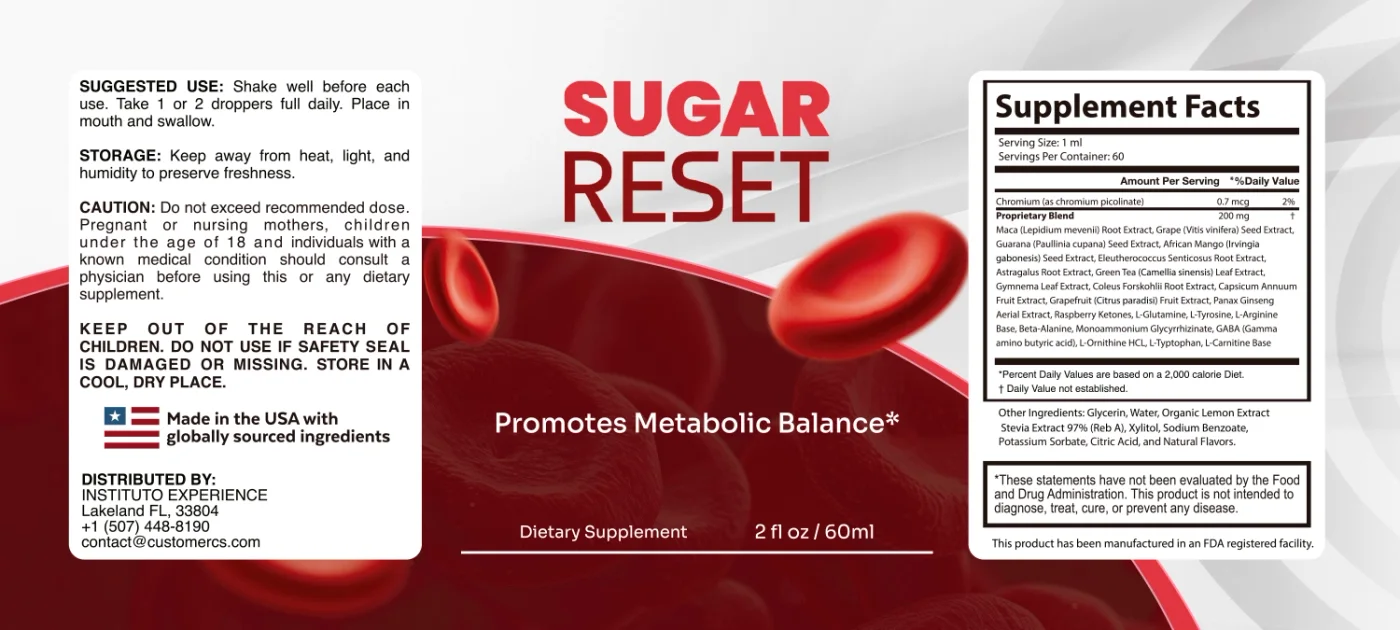
Full label, pricing and ingredient breakdown: our scored review. The label, the doses and the real checkout total: our Sugar Reset buyer's guide. What's actually on the label: our ingredients breakdown.
Frequently Asked Questions
Does Sugar Reset really have a 60-day money-back guarantee?
Yes. The written returns policy, hosted at lp.institutoexperience.com.br/returns/ and linked from the footer of the official sales page, confirms 60 days, for any reason, with no restocking fee mentioned anywhere in the text. It is the document a payment processor or a card issuer looks at in a dispute, and the one that survives a marketing page being rewritten — which is why we treat it, and not the sales copy, as the operative terms.
Do I have to use Sugar Reset for 30 days before I can get a refund?
The sales page says you do ("after at least 30 days of use"). The written returns policy does not repeat that condition anywhere. Because the written policy is the actual binding document, we would ask support directly and in writing before assuming you must wait 30 days — but budget for the possibility that a support agent enforces the sales page's wording anyway.
Is there really a 20% restocking fee on Sugar Reset refunds?
Not according to the written policy we read. That figure comes from a syndicated article (see our source below), not from the seller's own returns page. If a fee like that were ever charged, we would consider it a direct contradiction of the seller's published terms.
Do I need to return the bottle to get a refund?
The written policy does not say. It also does not require the bottle to be sealed or unopened, unlike a claim made in one syndicated article we reviewed. Ask support to confirm in writing before you throw the bottle away or open a new one.
When does the 60-day window start — the order date or the delivery date?
The policy contradicts itself on this exact point. Its opening paragraph says "within 60 days of the original purchase date." Its own Step 1, a few lines later, says the 60-day period starts "the day the order has been delivered to you." Purchase date and delivery date are not the same day, and the policy never says which of the two it means. Count from your purchase date, since it is the earlier of the two, and keep both dates from your confirmation and tracking emails.
Who do I actually contact for a Sugar Reset refund?
The written policy lists one channel: email, with "Refund Request" in the subject line, sent to the address published on the policy page. Do this in writing rather than by phone, so you have a timestamped record if a dispute comes up later.

Daniel Whitaker
I buy the products I write about, photograph the physical label, and put every package through checkout before I publish a number. I am not a doctor, a dietitian, or a medical professional, and nothing here is medical advice.
This article contains affiliate links. If you buy through them we may earn a commission at no extra cost to you. It does not change the label counts, the checkout totals or the criticisms above.